
Car key replacement
Planning for a lost, broken, worn, or missing vehicle key begins with the year, make, model, key type, location, and proof of ownership.
See car key serviceDelaware mobile locksmith service
Delaware Locksmith brings automotive, residential, and commercial service to customers across the First State. The service type, location, ownership documents, access conditions, and appointment availability are reviewed before dispatch.

Start here
Vehicle lockouts, lost keys, supported key programming, ignition concerns, and spare-key planning.
02 PropertyRekeying, lock changes, deadbolts, smart locks, access problems, and move-in planning.
03 BusinessStorefront locks, key control, panic hardware, door closers, rekeys, and authorized access work.
Service paths
A useful recommendation depends on what is locked, what changed, who is authorized to approve the work, and what the technician finds at the vehicle or property.
Planning for a lost, broken, worn, or missing vehicle key begins with the year, make, model, key type, location, and proof of ownership.
See car key serviceThe vehicle location, safety of the waiting area, lock condition, and ownership documents are confirmed before access work begins.
See lockout serviceNew ownership, tenant turnover, misplaced keys, damaged hardware, and access-control goals can lead to different service scopes.
See residential rekeyingDoor alignment, existing preparation, deadbolt dimensions, network needs, and the selected hardware all affect installation planning.
See smart lock planningAuthorized contacts, business hours, customer access, employee key control, door condition, and hardware type shape the visit.
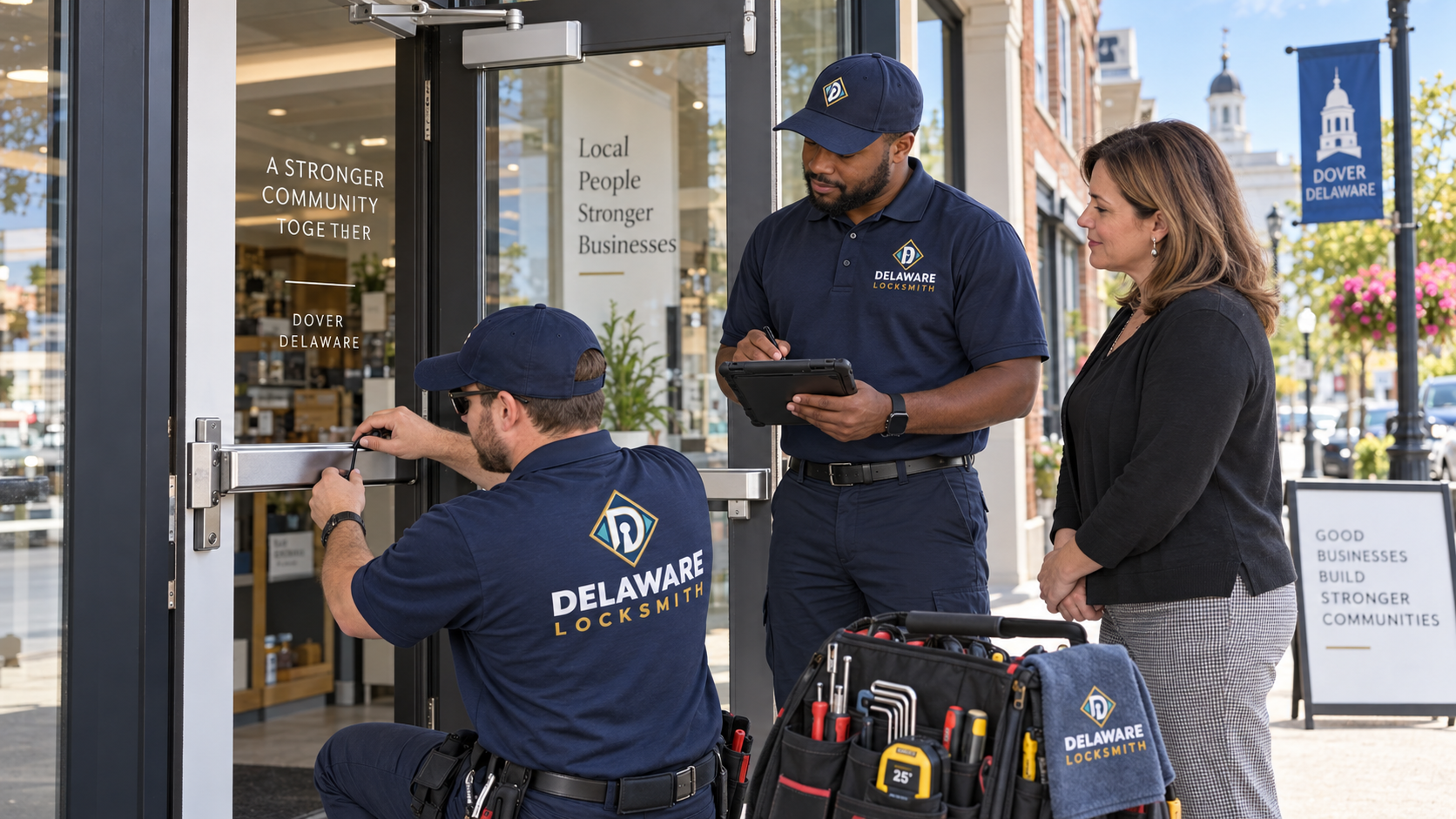
See commercial serviceExit devices, latching, alignment, closing speed, fire-rated openings, and code-sensitive conditions require careful inspection.
See door hardware service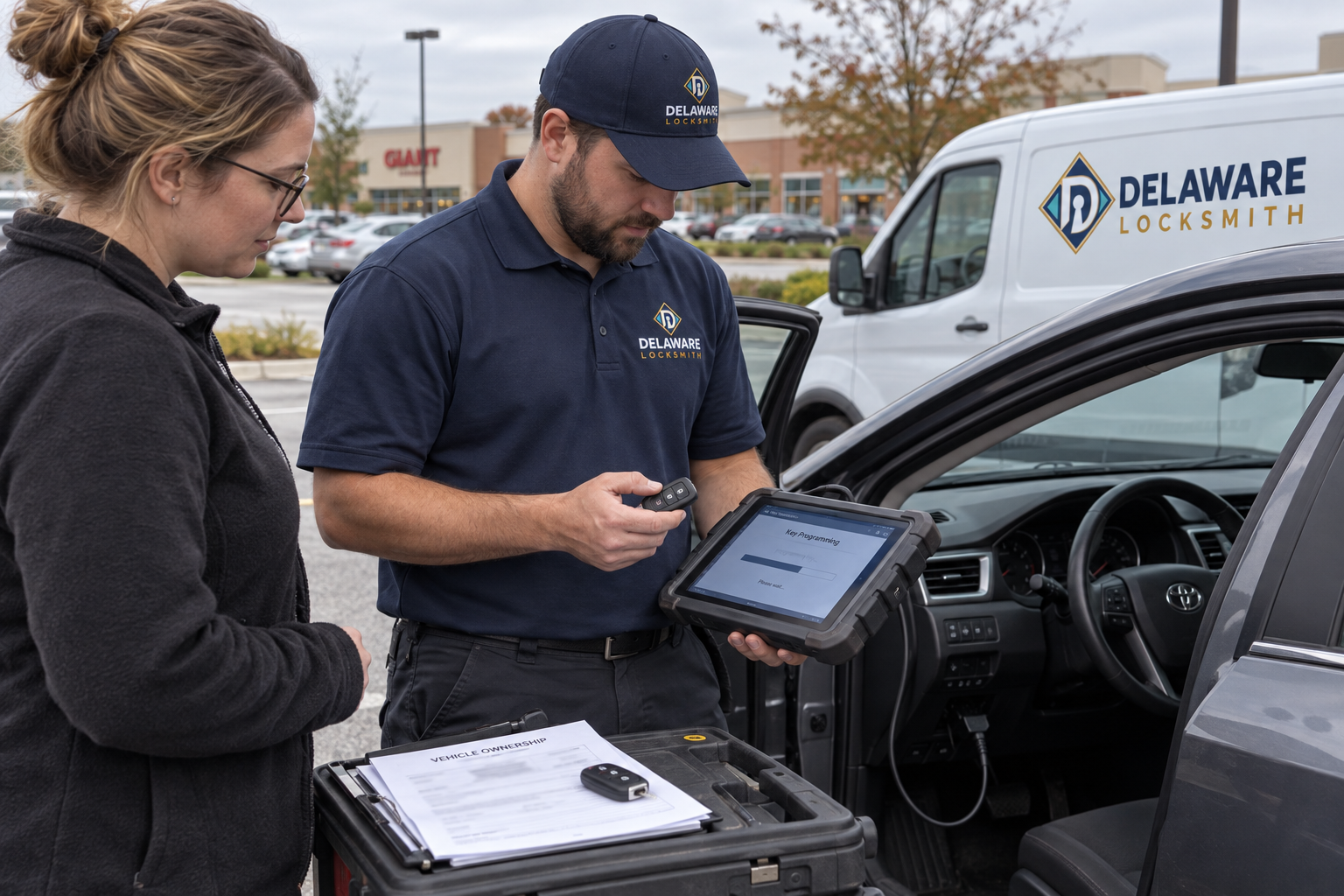
Automotive service
A car-key call is not scoped from the words "lost key" alone. The year, make, model, surviving keys, battery condition, security system, and exact vehicle location help determine whether the requested work is supported.
Government-issued identification and a registration, title, lease, or other document tying the customer to the vehicle should be available before access or key work begins. That protects the vehicle owner and gives the technician a clear basis for proceeding.
Explore automotive serviceA clear service process
Share the service type, exact location, access conditions, relevant hardware or vehicle details, and what changed.
Prepare identification and documents connecting you to the vehicle, residence, rental, or business opening.
Phone information supports planning. Complicated conditions may require an on-site assessment and a disclosed service-call charge.
Approved work should be tested against the actual key, lock, latch, door, vehicle, or access condition before closeout.
Residential work
Rekeying changes which keys operate a lock while preserving compatible hardware. Lock replacement changes the hardware itself. The condition of the cylinder, latch, door, frame, strike, hinges, and existing preparation can determine which path makes sense.
Move-in service, rental turnover, lost keys, damaged locks, and hardware upgrades should not automatically receive the same recommendation. The opening deserves a complete look before a final scope is approved.
Residential locksmith details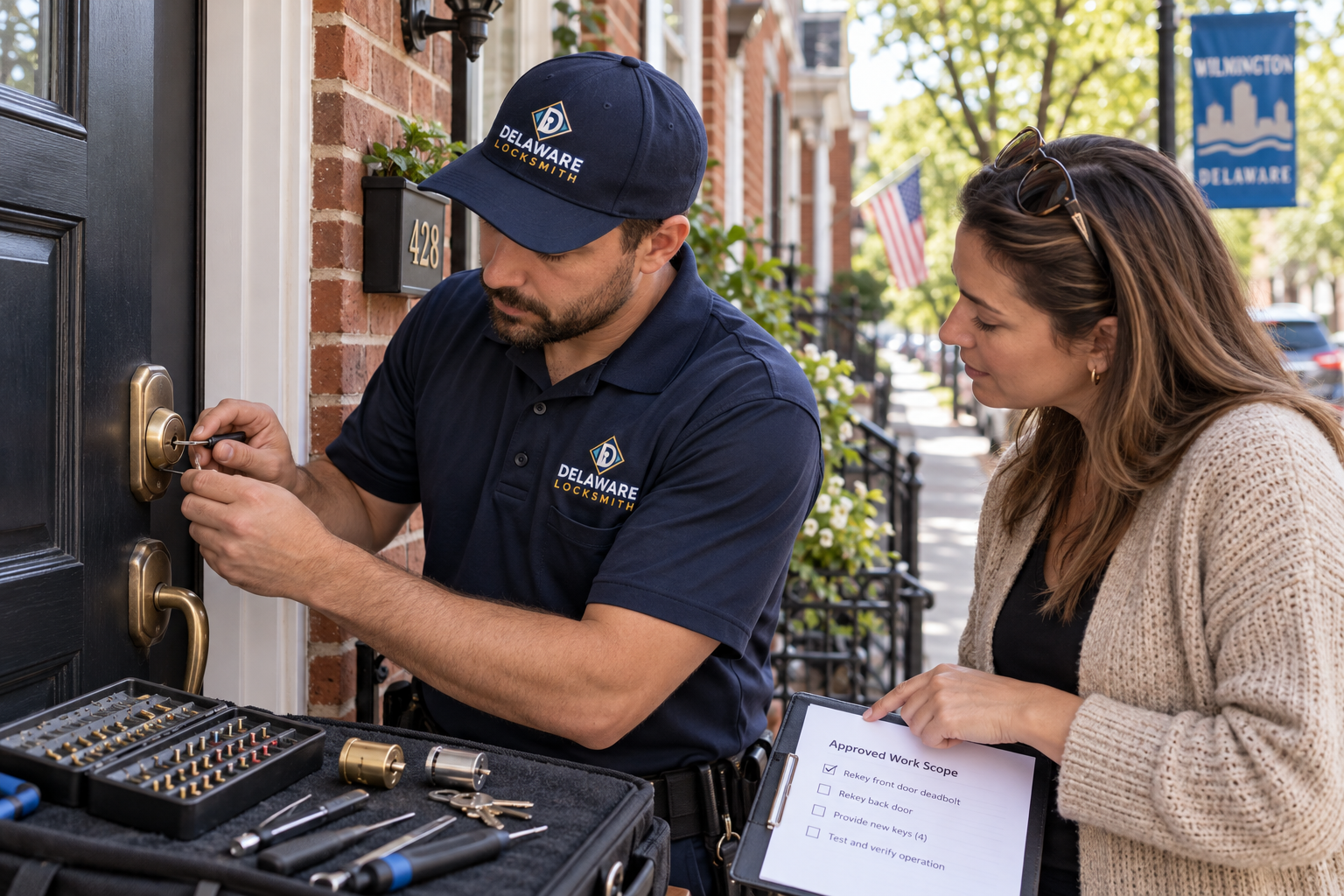
Statewide planning
Delaware's compact geography includes dense Wilmington blocks, Newark student and residential areas, Dover offices and neighborhoods, rural properties, beach communities, seasonal rentals, and commercial corridors. Coverage and scheduling are confirmed for the exact address before dispatch.
Service planning
This preview does not submit personal information. It demonstrates the service-intake questions that will help the dispatcher understand the request.
This the right lock and key plan starts with the details. page resource is for people comparing next steps, preparing authorization, and deciding what information to collect before scheduling. It does not replace an on-site evaluation when the condition is complicated.
For the right lock and key plan starts with the details. page, the section on describe the exact service setting should stay connected to the real service request. The next decision should follow the condition that is actually present. Customers should explain the immediate symptom, what happened before it appeared, what still operates normally, and whether anyone has already attempted a repair. In Delaware, the surrounding setting may include homes, vehicles, rentals, offices, storefronts, and other authorized settings. Those differences affect access, scheduling, documentation, and the amount of inspection needed before a recommendation is responsible. The discussion should cover cylinder type, keyway, hardware compatibility, finish, and available replacement parts. It should also identify business hours, employee access, customer traffic, emergency exits, and management approval. This keeps the right lock and key plan starts with the details. focused on the actual opening instead of a generic assumption.
During the describe the exact service setting review, a practical plan for the right lock and key plan starts with the details. page also considers authorization, inspection, compatible options, and closeout. Avoid dismantling secured hardware when ownership, fire-door requirements, wiring, or access-control connections are unclear. Phone information can help organize the appointment, but hidden wear, alignment, wiring, prior modifications, or incomplete key history may only become visible on site. If a service-call charge applies to a complicated assessment, it should be explained before dispatch. The customer should receive a clear description of the proposed work and have an opportunity to ask questions before approval. After the authorized work is completed, the lock, key, latch, credential, or vehicle function related to the request should be tested in ordinary use. Notes about keys, codes, users, and follow-up maintenance should be kept by the person responsible for the property or vehicle.
For the right lock and key plan starts with the details. page, the section on describe the exact service setting should stay connected to the real service request. A careful plan avoids treating every opening as if it were identical. Customers should explain the immediate symptom, what happened before it appeared, what still operates normally, and whether anyone has already attempted a repair. In Delaware, the surrounding setting may include homes, vehicles, rentals, offices, storefronts, and other authorized settings. Those differences affect access, scheduling, documentation, and the amount of inspection needed before a recommendation is responsible. The discussion should cover identification, proof of ownership or occupancy, and authority from the responsible person. It should also identify weather exposure, corrosion, sand, moisture, seasonal occupancy, and maintenance history. This keeps the right lock and key plan starts with the details. focused on the actual opening instead of a generic assumption.
During the describe the exact service setting review, a practical plan for the right lock and key plan starts with the details. page also considers authorization, inspection, compatible options, and closeout. Keep people and vehicles away from an unsafe doorway or roadside position while service is being arranged. Phone information can help organize the appointment, but hidden wear, alignment, wiring, prior modifications, or incomplete key history may only become visible on site. If a service-call charge applies to a complicated assessment, it should be explained before dispatch. The customer should receive a clear description of the proposed work and have an opportunity to ask questions before approval. After the authorized work is completed, the lock, key, latch, credential, or vehicle function related to the request should be tested in ordinary use. Notes about keys, codes, users, and follow-up maintenance should be kept by the person responsible for the property or vehicle.
For the right lock and key plan starts with the details. page, the section on confirm authority before access work should stay connected to the real service request. A careful plan avoids treating every opening as if it were identical. Customers should explain the immediate symptom, what happened before it appeared, what still operates normally, and whether anyone has already attempted a repair. In Delaware, the surrounding setting may include homes, vehicles, rentals, offices, storefronts, and other authorized settings. Those differences affect access, scheduling, documentation, and the amount of inspection needed before a recommendation is responsible. The discussion should cover vehicle year, make, model, key type, battery condition, and surviving keys. It should also identify mechanical wear, electronic power, network settings, programming status, and user permissions. This keeps the right lock and key plan starts with the details. focused on the actual opening instead of a generic assumption.
During the confirm authority before access work review, a practical plan for the right lock and key plan starts with the details. page also considers authorization, inspection, compatible options, and closeout. Keep people and vehicles away from an unsafe doorway or roadside position while service is being arranged. Phone information can help organize the appointment, but hidden wear, alignment, wiring, prior modifications, or incomplete key history may only become visible on site. If a service-call charge applies to a complicated assessment, it should be explained before dispatch. The customer should receive a clear description of the proposed work and have an opportunity to ask questions before approval. After the authorized work is completed, the lock, key, latch, credential, or vehicle function related to the request should be tested in ordinary use. Notes about keys, codes, users, and follow-up maintenance should be kept by the person responsible for the property or vehicle.
For the right lock and key plan starts with the details. page, the section on confirm authority before access work should stay connected to the real service request. Good preparation helps the customer and technician discuss the same problem. Customers should explain the immediate symptom, what happened before it appeared, what still operates normally, and whether anyone has already attempted a repair. In Delaware, the surrounding setting may include homes, vehicles, rentals, offices, storefronts, and other authorized settings. Those differences affect access, scheduling, documentation, and the amount of inspection needed before a recommendation is responsible. The discussion should cover business hours, employee access, customer traffic, emergency exits, and management approval. It should also identify door alignment, latch position, strike preparation, frame condition, and earlier repairs. This keeps the right lock and key plan starts with the details. focused on the actual opening instead of a generic assumption.
During the confirm authority before access work review, a practical plan for the right lock and key plan starts with the details. page also considers authorization, inspection, compatible options, and closeout. For a rental or managed property, obtain approval from the person responsible for the opening before work begins. Phone information can help organize the appointment, but hidden wear, alignment, wiring, prior modifications, or incomplete key history may only become visible on site. If a service-call charge applies to a complicated assessment, it should be explained before dispatch. The customer should receive a clear description of the proposed work and have an opportunity to ask questions before approval. After the authorized work is completed, the lock, key, latch, credential, or vehicle function related to the request should be tested in ordinary use. Notes about keys, codes, users, and follow-up maintenance should be kept by the person responsible for the property or vehicle.
For the right lock and key plan starts with the details. page, the section on document the current condition should stay connected to the real service request. Good preparation helps the customer and technician discuss the same problem. Customers should explain the immediate symptom, what happened before it appeared, what still operates normally, and whether anyone has already attempted a repair. In Delaware, the surrounding setting may include homes, vehicles, rentals, offices, storefronts, and other authorized settings. Those differences affect access, scheduling, documentation, and the amount of inspection needed before a recommendation is responsible. The discussion should cover weather exposure, corrosion, sand, moisture, seasonal occupancy, and maintenance history. It should also identify identification, proof of ownership or occupancy, and authority from the responsible person. This keeps the right lock and key plan starts with the details. focused on the actual opening instead of a generic assumption.
During the document the current condition review, a practical plan for the right lock and key plan starts with the details. page also considers authorization, inspection, compatible options, and closeout. For a rental or managed property, obtain approval from the person responsible for the opening before work begins. Phone information can help organize the appointment, but hidden wear, alignment, wiring, prior modifications, or incomplete key history may only become visible on site. If a service-call charge applies to a complicated assessment, it should be explained before dispatch. The customer should receive a clear description of the proposed work and have an opportunity to ask questions before approval. After the authorized work is completed, the lock, key, latch, credential, or vehicle function related to the request should be tested in ordinary use. Notes about keys, codes, users, and follow-up maintenance should be kept by the person responsible for the property or vehicle.
For the right lock and key plan starts with the details. page, the section on document the current condition should stay connected to the real service request. The service setting changes what information matters most. Customers should explain the immediate symptom, what happened before it appeared, what still operates normally, and whether anyone has already attempted a repair. In Delaware, the surrounding setting may include homes, vehicles, rentals, offices, storefronts, and other authorized settings. Those differences affect access, scheduling, documentation, and the amount of inspection needed before a recommendation is responsible. The discussion should cover parking, safe technician access, building rules, gated entry, and contact-person availability. It should also identify vehicle year, make, model, key type, battery condition, and surviving keys. This keeps the right lock and key plan starts with the details. focused on the actual opening instead of a generic assumption.
During the document the current condition review, a practical plan for the right lock and key plan starts with the details. page also considers authorization, inspection, compatible options, and closeout. For vehicle work, keep identification and a registration, title, lease, or other ownership document available. Phone information can help organize the appointment, but hidden wear, alignment, wiring, prior modifications, or incomplete key history may only become visible on site. If a service-call charge applies to a complicated assessment, it should be explained before dispatch. The customer should receive a clear description of the proposed work and have an opportunity to ask questions before approval. After the authorized work is completed, the lock, key, latch, credential, or vehicle function related to the request should be tested in ordinary use. Notes about keys, codes, users, and follow-up maintenance should be kept by the person responsible for the property or vehicle.
For the right lock and key plan starts with the details. page, the section on separate symptoms from causes should stay connected to the real service request. The service setting changes what information matters most. Customers should explain the immediate symptom, what happened before it appeared, what still operates normally, and whether anyone has already attempted a repair. In Delaware, the surrounding setting may include homes, vehicles, rentals, offices, storefronts, and other authorized settings. Those differences affect access, scheduling, documentation, and the amount of inspection needed before a recommendation is responsible. The discussion should cover mechanical wear, electronic power, network settings, programming status, and user permissions. It should also identify weather exposure, corrosion, sand, moisture, seasonal occupancy, and maintenance history. This keeps the right lock and key plan starts with the details. focused on the actual opening instead of a generic assumption.
During the separate symptoms from causes review, a practical plan for the right lock and key plan starts with the details. page also considers authorization, inspection, compatible options, and closeout. For vehicle work, keep identification and a registration, title, lease, or other ownership document available. Phone information can help organize the appointment, but hidden wear, alignment, wiring, prior modifications, or incomplete key history may only become visible on site. If a service-call charge applies to a complicated assessment, it should be explained before dispatch. The customer should receive a clear description of the proposed work and have an opportunity to ask questions before approval. After the authorized work is completed, the lock, key, latch, credential, or vehicle function related to the request should be tested in ordinary use. Notes about keys, codes, users, and follow-up maintenance should be kept by the person responsible for the property or vehicle.
For the right lock and key plan starts with the details. page, the section on separate symptoms from causes should stay connected to the real service request. A phone description can organize a visit, but it cannot expose every hidden condition. Customers should explain the immediate symptom, what happened before it appeared, what still operates normally, and whether anyone has already attempted a repair. In Delaware, the surrounding setting may include homes, vehicles, rentals, offices, storefronts, and other authorized settings. Those differences affect access, scheduling, documentation, and the amount of inspection needed before a recommendation is responsible. The discussion should cover door alignment, latch position, strike preparation, frame condition, and earlier repairs. It should also identify parking, safe technician access, building rules, gated entry, and contact-person availability. This keeps the right lock and key plan starts with the details. focused on the actual opening instead of a generic assumption.
During the separate symptoms from causes review, a practical plan for the right lock and key plan starts with the details. page also considers authorization, inspection, compatible options, and closeout. For commercial work, identify who can approve changes to keys, credentials, exit hardware, and access schedules. Phone information can help organize the appointment, but hidden wear, alignment, wiring, prior modifications, or incomplete key history may only become visible on site. If a service-call charge applies to a complicated assessment, it should be explained before dispatch. The customer should receive a clear description of the proposed work and have an opportunity to ask questions before approval. After the authorized work is completed, the lock, key, latch, credential, or vehicle function related to the request should be tested in ordinary use. Notes about keys, codes, users, and follow-up maintenance should be kept by the person responsible for the property or vehicle.
For the right lock and key plan starts with the details. page, the section on plan for the property or vehicle type should stay connected to the real service request. A phone description can organize a visit, but it cannot expose every hidden condition. Customers should explain the immediate symptom, what happened before it appeared, what still operates normally, and whether anyone has already attempted a repair. In Delaware, the surrounding setting may include homes, vehicles, rentals, offices, storefronts, and other authorized settings. Those differences affect access, scheduling, documentation, and the amount of inspection needed before a recommendation is responsible. The discussion should cover cylinder type, keyway, hardware compatibility, finish, and available replacement parts. It should also identify door alignment, latch position, strike preparation, frame condition, and earlier repairs. This keeps the right lock and key plan starts with the details. focused on the actual opening instead of a generic assumption.
During the plan for the property or vehicle type review, a practical plan for the right lock and key plan starts with the details. page also considers authorization, inspection, compatible options, and closeout. For commercial work, identify who can approve changes to keys, credentials, exit hardware, and access schedules. Phone information can help organize the appointment, but hidden wear, alignment, wiring, prior modifications, or incomplete key history may only become visible on site. If a service-call charge applies to a complicated assessment, it should be explained before dispatch. The customer should receive a clear description of the proposed work and have an opportunity to ask questions before approval. After the authorized work is completed, the lock, key, latch, credential, or vehicle function related to the request should be tested in ordinary use. Notes about keys, codes, users, and follow-up maintenance should be kept by the person responsible for the property or vehicle.
For the right lock and key plan starts with the details. page, the section on plan for the property or vehicle type should stay connected to the real service request. The customer should understand the proposed scope before authorizing work. Customers should explain the immediate symptom, what happened before it appeared, what still operates normally, and whether anyone has already attempted a repair. In Delaware, the surrounding setting may include homes, vehicles, rentals, offices, storefronts, and other authorized settings. Those differences affect access, scheduling, documentation, and the amount of inspection needed before a recommendation is responsible. The discussion should cover identification, proof of ownership or occupancy, and authority from the responsible person. It should also identify cylinder type, keyway, hardware compatibility, finish, and available replacement parts. This keeps the right lock and key plan starts with the details. focused on the actual opening instead of a generic assumption.
During the plan for the property or vehicle type review, a practical plan for the right lock and key plan starts with the details. page also considers authorization, inspection, compatible options, and closeout. Do not force a key, lever, cylinder, latch, or electronic device when resistance changes suddenly. Phone information can help organize the appointment, but hidden wear, alignment, wiring, prior modifications, or incomplete key history may only become visible on site. If a service-call charge applies to a complicated assessment, it should be explained before dispatch. The customer should receive a clear description of the proposed work and have an opportunity to ask questions before approval. After the authorized work is completed, the lock, key, latch, credential, or vehicle function related to the request should be tested in ordinary use. Notes about keys, codes, users, and follow-up maintenance should be kept by the person responsible for the property or vehicle.
For the right lock and key plan starts with the details. page, the section on understand what an inspection can reveal should stay connected to the real service request. The customer should understand the proposed scope before authorizing work. Customers should explain the immediate symptom, what happened before it appeared, what still operates normally, and whether anyone has already attempted a repair. In Delaware, the surrounding setting may include homes, vehicles, rentals, offices, storefronts, and other authorized settings. Those differences affect access, scheduling, documentation, and the amount of inspection needed before a recommendation is responsible. The discussion should cover vehicle year, make, model, key type, battery condition, and surviving keys. It should also identify vehicle year, make, model, key type, battery condition, and surviving keys. This keeps the right lock and key plan starts with the details. focused on the actual opening instead of a generic assumption.
During the understand what an inspection can reveal review, a practical plan for the right lock and key plan starts with the details. page also considers authorization, inspection, compatible options, and closeout. Do not force a key, lever, cylinder, latch, or electronic device when resistance changes suddenly. Phone information can help organize the appointment, but hidden wear, alignment, wiring, prior modifications, or incomplete key history may only become visible on site. If a service-call charge applies to a complicated assessment, it should be explained before dispatch. The customer should receive a clear description of the proposed work and have an opportunity to ask questions before approval. After the authorized work is completed, the lock, key, latch, credential, or vehicle function related to the request should be tested in ordinary use. Notes about keys, codes, users, and follow-up maintenance should be kept by the person responsible for the property or vehicle.
For the right lock and key plan starts with the details. page, the section on understand what an inspection can reveal should stay connected to the real service request. Clear documentation supports better key control after the visit. Customers should explain the immediate symptom, what happened before it appeared, what still operates normally, and whether anyone has already attempted a repair. In Delaware, the surrounding setting may include homes, vehicles, rentals, offices, storefronts, and other authorized settings. Those differences affect access, scheduling, documentation, and the amount of inspection needed before a recommendation is responsible. The discussion should cover business hours, employee access, customer traffic, emergency exits, and management approval. It should also identify business hours, employee access, customer traffic, emergency exits, and management approval. This keeps the right lock and key plan starts with the details. focused on the actual opening instead of a generic assumption.
During the understand what an inspection can reveal review, a practical plan for the right lock and key plan starts with the details. page also considers authorization, inspection, compatible options, and closeout. Avoid dismantling secured hardware when ownership, fire-door requirements, wiring, or access-control connections are unclear. Phone information can help organize the appointment, but hidden wear, alignment, wiring, prior modifications, or incomplete key history may only become visible on site. If a service-call charge applies to a complicated assessment, it should be explained before dispatch. The customer should receive a clear description of the proposed work and have an opportunity to ask questions before approval. After the authorized work is completed, the lock, key, latch, credential, or vehicle function related to the request should be tested in ordinary use. Notes about keys, codes, users, and follow-up maintenance should be kept by the person responsible for the property or vehicle.
For the right lock and key plan starts with the details. page, the section on discuss repair, adjustment, and replacement paths should stay connected to the real service request. Clear documentation supports better key control after the visit. Customers should explain the immediate symptom, what happened before it appeared, what still operates normally, and whether anyone has already attempted a repair. In Delaware, the surrounding setting may include homes, vehicles, rentals, offices, storefronts, and other authorized settings. Those differences affect access, scheduling, documentation, and the amount of inspection needed before a recommendation is responsible. The discussion should cover weather exposure, corrosion, sand, moisture, seasonal occupancy, and maintenance history. It should also identify parking, safe technician access, building rules, gated entry, and contact-person availability. This keeps the right lock and key plan starts with the details. focused on the actual opening instead of a generic assumption.
During the discuss repair, adjustment, and replacement paths review, a practical plan for the right lock and key plan starts with the details. page also considers authorization, inspection, compatible options, and closeout. Avoid dismantling secured hardware when ownership, fire-door requirements, wiring, or access-control connections are unclear. Phone information can help organize the appointment, but hidden wear, alignment, wiring, prior modifications, or incomplete key history may only become visible on site. If a service-call charge applies to a complicated assessment, it should be explained before dispatch. The customer should receive a clear description of the proposed work and have an opportunity to ask questions before approval. After the authorized work is completed, the lock, key, latch, credential, or vehicle function related to the request should be tested in ordinary use. Notes about keys, codes, users, and follow-up maintenance should be kept by the person responsible for the property or vehicle.
For the right lock and key plan starts with the details. page, the section on discuss repair, adjustment, and replacement paths should stay connected to the real service request. A useful conversation starts with observable facts. Customers should explain the immediate symptom, what happened before it appeared, what still operates normally, and whether anyone has already attempted a repair. In Delaware, the surrounding setting may include homes, vehicles, rentals, offices, storefronts, and other authorized settings. Those differences affect access, scheduling, documentation, and the amount of inspection needed before a recommendation is responsible. The discussion should cover parking, safe technician access, building rules, gated entry, and contact-person availability. It should also identify mechanical wear, electronic power, network settings, programming status, and user permissions. This keeps the right lock and key plan starts with the details. focused on the actual opening instead of a generic assumption.
During the discuss repair, adjustment, and replacement paths review, a practical plan for the right lock and key plan starts with the details. page also considers authorization, inspection, compatible options, and closeout. Keep people and vehicles away from an unsafe doorway or roadside position while service is being arranged. Phone information can help organize the appointment, but hidden wear, alignment, wiring, prior modifications, or incomplete key history may only become visible on site. If a service-call charge applies to a complicated assessment, it should be explained before dispatch. The customer should receive a clear description of the proposed work and have an opportunity to ask questions before approval. After the authorized work is completed, the lock, key, latch, credential, or vehicle function related to the request should be tested in ordinary use. Notes about keys, codes, users, and follow-up maintenance should be kept by the person responsible for the property or vehicle.
For the right lock and key plan starts with the details. page, the section on prepare the work area should stay connected to the real service request. A useful conversation starts with observable facts. Customers should explain the immediate symptom, what happened before it appeared, what still operates normally, and whether anyone has already attempted a repair. In Delaware, the surrounding setting may include homes, vehicles, rentals, offices, storefronts, and other authorized settings. Those differences affect access, scheduling, documentation, and the amount of inspection needed before a recommendation is responsible. The discussion should cover mechanical wear, electronic power, network settings, programming status, and user permissions. It should also identify cylinder type, keyway, hardware compatibility, finish, and available replacement parts. This keeps the right lock and key plan starts with the details. focused on the actual opening instead of a generic assumption.
During the prepare the work area review, a practical plan for the right lock and key plan starts with the details. page also considers authorization, inspection, compatible options, and closeout. Keep people and vehicles away from an unsafe doorway or roadside position while service is being arranged. Phone information can help organize the appointment, but hidden wear, alignment, wiring, prior modifications, or incomplete key history may only become visible on site. If a service-call charge applies to a complicated assessment, it should be explained before dispatch. The customer should receive a clear description of the proposed work and have an opportunity to ask questions before approval. After the authorized work is completed, the lock, key, latch, credential, or vehicle function related to the request should be tested in ordinary use. Notes about keys, codes, users, and follow-up maintenance should be kept by the person responsible for the property or vehicle.
For the right lock and key plan starts with the details. page, the section on prepare the work area should stay connected to the real service request. The next decision should follow the condition that is actually present. Customers should explain the immediate symptom, what happened before it appeared, what still operates normally, and whether anyone has already attempted a repair. In Delaware, the surrounding setting may include homes, vehicles, rentals, offices, storefronts, and other authorized settings. Those differences affect access, scheduling, documentation, and the amount of inspection needed before a recommendation is responsible. The discussion should cover door alignment, latch position, strike preparation, frame condition, and earlier repairs. It should also identify identification, proof of ownership or occupancy, and authority from the responsible person. This keeps the right lock and key plan starts with the details. focused on the actual opening instead of a generic assumption.
During the prepare the work area review, a practical plan for the right lock and key plan starts with the details. page also considers authorization, inspection, compatible options, and closeout. For a rental or managed property, obtain approval from the person responsible for the opening before work begins. Phone information can help organize the appointment, but hidden wear, alignment, wiring, prior modifications, or incomplete key history may only become visible on site. If a service-call charge applies to a complicated assessment, it should be explained before dispatch. The customer should receive a clear description of the proposed work and have an opportunity to ask questions before approval. After the authorized work is completed, the lock, key, latch, credential, or vehicle function related to the request should be tested in ordinary use. Notes about keys, codes, users, and follow-up maintenance should be kept by the person responsible for the property or vehicle.
For the right lock and key plan starts with the details. page, the section on review appointment and dispatch details should stay connected to the real service request. The next decision should follow the condition that is actually present. Customers should explain the immediate symptom, what happened before it appeared, what still operates normally, and whether anyone has already attempted a repair. In Delaware, the surrounding setting may include homes, vehicles, rentals, offices, storefronts, and other authorized settings. Those differences affect access, scheduling, documentation, and the amount of inspection needed before a recommendation is responsible. The discussion should cover cylinder type, keyway, hardware compatibility, finish, and available replacement parts. It should also identify business hours, employee access, customer traffic, emergency exits, and management approval. This keeps the right lock and key plan starts with the details. focused on the actual opening instead of a generic assumption.
During the review appointment and dispatch details review, a practical plan for the right lock and key plan starts with the details. page also considers authorization, inspection, compatible options, and closeout. For a rental or managed property, obtain approval from the person responsible for the opening before work begins. Phone information can help organize the appointment, but hidden wear, alignment, wiring, prior modifications, or incomplete key history may only become visible on site. If a service-call charge applies to a complicated assessment, it should be explained before dispatch. The customer should receive a clear description of the proposed work and have an opportunity to ask questions before approval. After the authorized work is completed, the lock, key, latch, credential, or vehicle function related to the request should be tested in ordinary use. Notes about keys, codes, users, and follow-up maintenance should be kept by the person responsible for the property or vehicle.
For the right lock and key plan starts with the details. page, the section on review appointment and dispatch details should stay connected to the real service request. A careful plan avoids treating every opening as if it were identical. Customers should explain the immediate symptom, what happened before it appeared, what still operates normally, and whether anyone has already attempted a repair. In Delaware, the surrounding setting may include homes, vehicles, rentals, offices, storefronts, and other authorized settings. Those differences affect access, scheduling, documentation, and the amount of inspection needed before a recommendation is responsible. The discussion should cover identification, proof of ownership or occupancy, and authority from the responsible person. It should also identify weather exposure, corrosion, sand, moisture, seasonal occupancy, and maintenance history. This keeps the right lock and key plan starts with the details. focused on the actual opening instead of a generic assumption.
During the review appointment and dispatch details review, a practical plan for the right lock and key plan starts with the details. page also considers authorization, inspection, compatible options, and closeout. For vehicle work, keep identification and a registration, title, lease, or other ownership document available. Phone information can help organize the appointment, but hidden wear, alignment, wiring, prior modifications, or incomplete key history may only become visible on site. If a service-call charge applies to a complicated assessment, it should be explained before dispatch. The customer should receive a clear description of the proposed work and have an opportunity to ask questions before approval. After the authorized work is completed, the lock, key, latch, credential, or vehicle function related to the request should be tested in ordinary use. Notes about keys, codes, users, and follow-up maintenance should be kept by the person responsible for the property or vehicle.
For the right lock and key plan starts with the details. page, the section on ask about service-call terms should stay connected to the real service request. A careful plan avoids treating every opening as if it were identical. Customers should explain the immediate symptom, what happened before it appeared, what still operates normally, and whether anyone has already attempted a repair. In Delaware, the surrounding setting may include homes, vehicles, rentals, offices, storefronts, and other authorized settings. Those differences affect access, scheduling, documentation, and the amount of inspection needed before a recommendation is responsible. The discussion should cover vehicle year, make, model, key type, battery condition, and surviving keys. It should also identify mechanical wear, electronic power, network settings, programming status, and user permissions. This keeps the right lock and key plan starts with the details. focused on the actual opening instead of a generic assumption.
During the ask about service-call terms review, a practical plan for the right lock and key plan starts with the details. page also considers authorization, inspection, compatible options, and closeout. For vehicle work, keep identification and a registration, title, lease, or other ownership document available. Phone information can help organize the appointment, but hidden wear, alignment, wiring, prior modifications, or incomplete key history may only become visible on site. If a service-call charge applies to a complicated assessment, it should be explained before dispatch. The customer should receive a clear description of the proposed work and have an opportunity to ask questions before approval. After the authorized work is completed, the lock, key, latch, credential, or vehicle function related to the request should be tested in ordinary use. Notes about keys, codes, users, and follow-up maintenance should be kept by the person responsible for the property or vehicle.
For the right lock and key plan starts with the details. page, the section on ask about service-call terms should stay connected to the real service request. Good preparation helps the customer and technician discuss the same problem. Customers should explain the immediate symptom, what happened before it appeared, what still operates normally, and whether anyone has already attempted a repair. In Delaware, the surrounding setting may include homes, vehicles, rentals, offices, storefronts, and other authorized settings. Those differences affect access, scheduling, documentation, and the amount of inspection needed before a recommendation is responsible. The discussion should cover business hours, employee access, customer traffic, emergency exits, and management approval. It should also identify door alignment, latch position, strike preparation, frame condition, and earlier repairs. This keeps the right lock and key plan starts with the details. focused on the actual opening instead of a generic assumption.
During the ask about service-call terms review, a practical plan for the right lock and key plan starts with the details. page also considers authorization, inspection, compatible options, and closeout. For commercial work, identify who can approve changes to keys, credentials, exit hardware, and access schedules. Phone information can help organize the appointment, but hidden wear, alignment, wiring, prior modifications, or incomplete key history may only become visible on site. If a service-call charge applies to a complicated assessment, it should be explained before dispatch. The customer should receive a clear description of the proposed work and have an opportunity to ask questions before approval. After the authorized work is completed, the lock, key, latch, credential, or vehicle function related to the request should be tested in ordinary use. Notes about keys, codes, users, and follow-up maintenance should be kept by the person responsible for the property or vehicle.
For the right lock and key plan starts with the details. page, the section on protect keys and credentials should stay connected to the real service request. Good preparation helps the customer and technician discuss the same problem. Customers should explain the immediate symptom, what happened before it appeared, what still operates normally, and whether anyone has already attempted a repair. In Delaware, the surrounding setting may include homes, vehicles, rentals, offices, storefronts, and other authorized settings. Those differences affect access, scheduling, documentation, and the amount of inspection needed before a recommendation is responsible. The discussion should cover weather exposure, corrosion, sand, moisture, seasonal occupancy, and maintenance history. It should also identify identification, proof of ownership or occupancy, and authority from the responsible person. This keeps the right lock and key plan starts with the details. focused on the actual opening instead of a generic assumption.
During the protect keys and credentials review, a practical plan for the right lock and key plan starts with the details. page also considers authorization, inspection, compatible options, and closeout. For commercial work, identify who can approve changes to keys, credentials, exit hardware, and access schedules. Phone information can help organize the appointment, but hidden wear, alignment, wiring, prior modifications, or incomplete key history may only become visible on site. If a service-call charge applies to a complicated assessment, it should be explained before dispatch. The customer should receive a clear description of the proposed work and have an opportunity to ask questions before approval. After the authorized work is completed, the lock, key, latch, credential, or vehicle function related to the request should be tested in ordinary use. Notes about keys, codes, users, and follow-up maintenance should be kept by the person responsible for the property or vehicle.
For the right lock and key plan starts with the details. page, the section on protect keys and credentials should stay connected to the real service request. The service setting changes what information matters most. Customers should explain the immediate symptom, what happened before it appeared, what still operates normally, and whether anyone has already attempted a repair. In Delaware, the surrounding setting may include homes, vehicles, rentals, offices, storefronts, and other authorized settings. Those differences affect access, scheduling, documentation, and the amount of inspection needed before a recommendation is responsible. The discussion should cover parking, safe technician access, building rules, gated entry, and contact-person availability. It should also identify vehicle year, make, model, key type, battery condition, and surviving keys. This keeps the right lock and key plan starts with the details. focused on the actual opening instead of a generic assumption.
During the protect keys and credentials review, a practical plan for the right lock and key plan starts with the details. page also considers authorization, inspection, compatible options, and closeout. Do not force a key, lever, cylinder, latch, or electronic device when resistance changes suddenly. Phone information can help organize the appointment, but hidden wear, alignment, wiring, prior modifications, or incomplete key history may only become visible on site. If a service-call charge applies to a complicated assessment, it should be explained before dispatch. The customer should receive a clear description of the proposed work and have an opportunity to ask questions before approval. After the authorized work is completed, the lock, key, latch, credential, or vehicle function related to the request should be tested in ordinary use. Notes about keys, codes, users, and follow-up maintenance should be kept by the person responsible for the property or vehicle.
For the right lock and key plan starts with the details. page, the section on test the approved result should stay connected to the real service request. The service setting changes what information matters most. Customers should explain the immediate symptom, what happened before it appeared, what still operates normally, and whether anyone has already attempted a repair. In Delaware, the surrounding setting may include homes, vehicles, rentals, offices, storefronts, and other authorized settings. Those differences affect access, scheduling, documentation, and the amount of inspection needed before a recommendation is responsible. The discussion should cover mechanical wear, electronic power, network settings, programming status, and user permissions. It should also identify weather exposure, corrosion, sand, moisture, seasonal occupancy, and maintenance history. This keeps the right lock and key plan starts with the details. focused on the actual opening instead of a generic assumption.
During the test the approved result review, a practical plan for the right lock and key plan starts with the details. page also considers authorization, inspection, compatible options, and closeout. Do not force a key, lever, cylinder, latch, or electronic device when resistance changes suddenly. Phone information can help organize the appointment, but hidden wear, alignment, wiring, prior modifications, or incomplete key history may only become visible on site. If a service-call charge applies to a complicated assessment, it should be explained before dispatch. The customer should receive a clear description of the proposed work and have an opportunity to ask questions before approval. After the authorized work is completed, the lock, key, latch, credential, or vehicle function related to the request should be tested in ordinary use. Notes about keys, codes, users, and follow-up maintenance should be kept by the person responsible for the property or vehicle.
For the right lock and key plan starts with the details. page, the section on test the approved result should stay connected to the real service request. A phone description can organize a visit, but it cannot expose every hidden condition. Customers should explain the immediate symptom, what happened before it appeared, what still operates normally, and whether anyone has already attempted a repair. In Delaware, the surrounding setting may include homes, vehicles, rentals, offices, storefronts, and other authorized settings. Those differences affect access, scheduling, documentation, and the amount of inspection needed before a recommendation is responsible. The discussion should cover door alignment, latch position, strike preparation, frame condition, and earlier repairs. It should also identify parking, safe technician access, building rules, gated entry, and contact-person availability. This keeps the right lock and key plan starts with the details. focused on the actual opening instead of a generic assumption.
During the test the approved result review, a practical plan for the right lock and key plan starts with the details. page also considers authorization, inspection, compatible options, and closeout. Avoid dismantling secured hardware when ownership, fire-door requirements, wiring, or access-control connections are unclear. Phone information can help organize the appointment, but hidden wear, alignment, wiring, prior modifications, or incomplete key history may only become visible on site. If a service-call charge applies to a complicated assessment, it should be explained before dispatch. The customer should receive a clear description of the proposed work and have an opportunity to ask questions before approval. After the authorized work is completed, the lock, key, latch, credential, or vehicle function related to the request should be tested in ordinary use. Notes about keys, codes, users, and follow-up maintenance should be kept by the person responsible for the property or vehicle.
For the right lock and key plan starts with the details. page, the section on record the completed scope should stay connected to the real service request. A phone description can organize a visit, but it cannot expose every hidden condition. Customers should explain the immediate symptom, what happened before it appeared, what still operates normally, and whether anyone has already attempted a repair. In Delaware, the surrounding setting may include homes, vehicles, rentals, offices, storefronts, and other authorized settings. Those differences affect access, scheduling, documentation, and the amount of inspection needed before a recommendation is responsible. The discussion should cover cylinder type, keyway, hardware compatibility, finish, and available replacement parts. It should also identify door alignment, latch position, strike preparation, frame condition, and earlier repairs. This keeps the right lock and key plan starts with the details. focused on the actual opening instead of a generic assumption.
During the record the completed scope review, a practical plan for the right lock and key plan starts with the details. page also considers authorization, inspection, compatible options, and closeout. Avoid dismantling secured hardware when ownership, fire-door requirements, wiring, or access-control connections are unclear. Phone information can help organize the appointment, but hidden wear, alignment, wiring, prior modifications, or incomplete key history may only become visible on site. If a service-call charge applies to a complicated assessment, it should be explained before dispatch. The customer should receive a clear description of the proposed work and have an opportunity to ask questions before approval. After the authorized work is completed, the lock, key, latch, credential, or vehicle function related to the request should be tested in ordinary use. Notes about keys, codes, users, and follow-up maintenance should be kept by the person responsible for the property or vehicle.
For the right lock and key plan starts with the details. page, the section on record the completed scope should stay connected to the real service request. The customer should understand the proposed scope before authorizing work. Customers should explain the immediate symptom, what happened before it appeared, what still operates normally, and whether anyone has already attempted a repair. In Delaware, the surrounding setting may include homes, vehicles, rentals, offices, storefronts, and other authorized settings. Those differences affect access, scheduling, documentation, and the amount of inspection needed before a recommendation is responsible. The discussion should cover identification, proof of ownership or occupancy, and authority from the responsible person. It should also identify cylinder type, keyway, hardware compatibility, finish, and available replacement parts. This keeps the right lock and key plan starts with the details. focused on the actual opening instead of a generic assumption.
During the record the completed scope review, a practical plan for the right lock and key plan starts with the details. page also considers authorization, inspection, compatible options, and closeout. Keep people and vehicles away from an unsafe doorway or roadside position while service is being arranged. Phone information can help organize the appointment, but hidden wear, alignment, wiring, prior modifications, or incomplete key history may only become visible on site. If a service-call charge applies to a complicated assessment, it should be explained before dispatch. The customer should receive a clear description of the proposed work and have an opportunity to ask questions before approval. After the authorized work is completed, the lock, key, latch, credential, or vehicle function related to the request should be tested in ordinary use. Notes about keys, codes, users, and follow-up maintenance should be kept by the person responsible for the property or vehicle.
For the right lock and key plan starts with the details. page, the section on plan sensible follow-up should stay connected to the real service request. The customer should understand the proposed scope before authorizing work. Customers should explain the immediate symptom, what happened before it appeared, what still operates normally, and whether anyone has already attempted a repair. In Delaware, the surrounding setting may include homes, vehicles, rentals, offices, storefronts, and other authorized settings. Those differences affect access, scheduling, documentation, and the amount of inspection needed before a recommendation is responsible. The discussion should cover vehicle year, make, model, key type, battery condition, and surviving keys. It should also identify vehicle year, make, model, key type, battery condition, and surviving keys. This keeps the right lock and key plan starts with the details. focused on the actual opening instead of a generic assumption.
During the plan sensible follow-up review, a practical plan for the right lock and key plan starts with the details. page also considers authorization, inspection, compatible options, and closeout. Keep people and vehicles away from an unsafe doorway or roadside position while service is being arranged. Phone information can help organize the appointment, but hidden wear, alignment, wiring, prior modifications, or incomplete key history may only become visible on site. If a service-call charge applies to a complicated assessment, it should be explained before dispatch. The customer should receive a clear description of the proposed work and have an opportunity to ask questions before approval. After the authorized work is completed, the lock, key, latch, credential, or vehicle function related to the request should be tested in ordinary use. Notes about keys, codes, users, and follow-up maintenance should be kept by the person responsible for the property or vehicle.
For the right lock and key plan starts with the details. page, the section on plan sensible follow-up should stay connected to the real service request. Clear documentation supports better key control after the visit. Customers should explain the immediate symptom, what happened before it appeared, what still operates normally, and whether anyone has already attempted a repair. In Delaware, the surrounding setting may include homes, vehicles, rentals, offices, storefronts, and other authorized settings. Those differences affect access, scheduling, documentation, and the amount of inspection needed before a recommendation is responsible. The discussion should cover business hours, employee access, customer traffic, emergency exits, and management approval. It should also identify business hours, employee access, customer traffic, emergency exits, and management approval. This keeps the right lock and key plan starts with the details. focused on the actual opening instead of a generic assumption.
During the plan sensible follow-up review, a practical plan for the right lock and key plan starts with the details. page also considers authorization, inspection, compatible options, and closeout. For a rental or managed property, obtain approval from the person responsible for the opening before work begins. Phone information can help organize the appointment, but hidden wear, alignment, wiring, prior modifications, or incomplete key history may only become visible on site. If a service-call charge applies to a complicated assessment, it should be explained before dispatch. The customer should receive a clear description of the proposed work and have an opportunity to ask questions before approval. After the authorized work is completed, the lock, key, latch, credential, or vehicle function related to the request should be tested in ordinary use. Notes about keys, codes, users, and follow-up maintenance should be kept by the person responsible for the property or vehicle.